top of page
Search

The Legal Liability of Bull Bars

Courtney Iseman

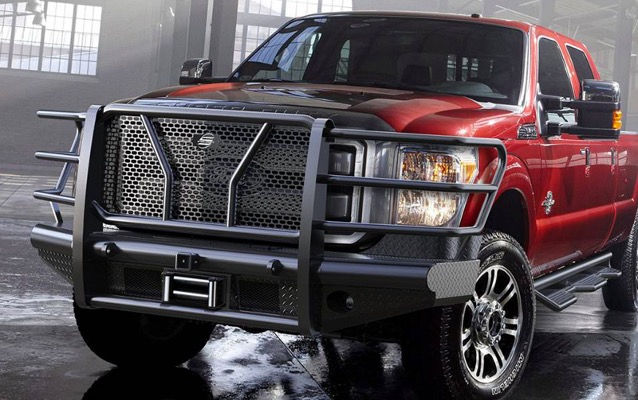
What are the metal cages welded to the front of trucks, and what is their purpose? Bull bars are inflexible metal cages affixed to the front of large cars, originally created to prevent auto body damage in vehicle collisions with wildlife.[1] This post-production modification is not created or added by the original equipment manufacturers (OEM) of the vehicle.[2] Rather, vehicle owners purchase the bars from third-party manufacturers who are not associated with the design or engineering of the vehicle.[3] 
 

ree
 
Although bull bars were originally designed for use in rural areas, they are now prevalent in urban areas.[5] The bars are often seen as an aesthetic accessory.[6] In cities with little to no wildlife and a high density of pedestrians, bull bars have posed a heightened safety concern to cyclists and pedestrians.[7] Bull bars are typically seen on vehicles that are already considered dangerous to pedestrians, such as tall and heavy SUVs.[8] The bars and the type of vehicles’ bull bars are usually affixed to compound this risk to pedestrians, as the bars lead to greater injuries.[9] In vehicle-pedestrian accidents, bull bars tend to collide with the torso of the pedestrian.[10] The typical design of a front bumper allows for a pedestrian to roll onto the windshield in a collision.[11] 

While bull bars lead to high fatality rates compared to vehicles without bull bars, the United States has had minimal explanation of its implications in tort law, and scarcely any legal reform towards public safety. 
 
An Unsure Path to Liability
 
Bull bars lead to an unresolved issue of liability in personal injury cases. In a personal injury case involving post-production bars, whom can the plaintiff sue? Is the vehicle owner solely liable? Or, can the manufacturer of the bull bars be held liable as well? 

Though there appears to be no tort suit of direct liability given to the bull bar manufacturers, other post-production modifications provide clarity to possible liability. The Court of Civil Appeals of Texas found that personal injury suits involving a vehicle with post-production modification may allow for liability to fall on the modification manufacturer, rather than the OEM.[12] In 1980, a beer truck, originally manufactured by General Motors and sold to Century Chevrolet, was in a collision.[13] The beer truck was modified, post-production, before the collision.[14] The Court sided with the Third Circuit's opinion that the OEM should not be held liable for vehicles that have been significantly modified post-production.[15] Instead of OEM liability, the 2nd Court of Appeals found that “it would appear from this that the company which added the beer storage unit, and not G.M., would have the expertise to assess design implications and the ramifications on safety which any design changes might require.”[16] The logic that post-production modifiers should analyze the design and safety concerns of the modification turns liability for pedestrian-bull bar collisions onto the post-production manufacturers. 

On the other hand, liability for post-production manufacturers may be limited. When modification by the vehicle owner is seen as excessive, liability is shifted to the vehicle owner solely, with the insurer no longer responsible to defend or indemnify the cost.[17] For example, a vehicle that is modified for off-roading may no longer be acknowledged as an automobile for the sake of insurance coverage.[18] This is true when the modification interferes with the vehicle's safety features.[19] Bull bars can interfere with safety features, such as headlights.[20] 

The lack of consistency about liability in collisions with bull bars may lead to confusion for a plaintiff and their attorneys. Additionally, bull bars may disqualify a vehicle owner from the legal representation of their insurance in the case of a collision. In 2022, Massachusetts established a personal injury guide to bull bars, along with a traffic code forbidding the bars.[21] To ensure lawyers, injured parties, and vehicle owners understand the risks, states should be encouraged to write laws and guidance about bull bars. 
 
Lack of Governmental Reform
 
The United States has had little to no structural regulations on the types of vehicle shapes and how designs impact collisions.[22] With that, there is very little government regulation on bull bars.[23] Massachusetts and New York are the only states with regulations. Massachusetts took a widespread approach in 2022, which outright prohibited bull bars and developed criteria to end its utilization: “bull bars or other aftermarket modifications and accessories that increase fatality and serious injury risk to vulnerable road users, including children, in a collision with the vehicle; and incorporate compliance requirements into the Massachusetts Vehicle Check program and the Massachusetts Commercial Motor Vehicle Inspection.”[24] Like the restrictive measures in Massachusetts, the New York City Taxi and Limousine Commission prohibited and increased inspections for bull bars on limousines and taxicabs due to pedestrian injuries.[25] 

It would serve the pedestrians of large cities a benefit if bull bars were banned in crowded metropolitan areas that do not endure an actual chance of vehicle-wildlife collisions. Many European countries and Australia acted against bull bars and their threat to pedestrians.[26] The United Nations Economic Commission for Europe Working Party on the Protection of Pedestrians recommended that bull bars be prohibited on streets.[27] Criteria to enhance the construction of bull bars were recommended to lessen injury.[28] The European Council Working Group and the European Parliamentary Committee made a proposal to reinvent bull bars to be less rigid.[29] One alternative to the traditional metal bull bars is plastic bars.[30] Overall, the Group and Committee found that these less rigid bars are just as effective for vehicle protection while minimizing pedestrian injuries.
 
Conclusion
 
Bull bar regulation in the United States should leave behind its rugged roots and modernize. For urban areas, bull bars should be reformed, reinvented, or prohibited. Additionally, states should make tort litigation straightforward to protect consumers and injured pedestrians. Pedestrian-safe streets in metropolitan areas cannot truly exist without pedestrian-conscious vehicle design.

[1] Jean-François Bonnefon Et Al., The Trolley, the Bull Bar, and Why Engineers Should Care About the Ethics of Autonomous Cars, 107 PROCEEDINGS OF THE IEEE 502, 503 (2019). 
[2] Ediriweera Desapriya Et Al., Bull Bars and Vulnerable Road Users, 13 TRAFFIC INJURY PREVENTION 86, 87 (2012). 
[3] Id.
[4] NAW TRUCK ACCESSORIES, https://nawtruckaccessories.com/products/bumpers-grille-guards-bull-bars/ (last visited Jun. 1, 2025).
[5] Desapriya, supra note 2 at 87.
[6] Sara C. Bronin, Rules of the Road: The Struggle for Safety & the Unmet Promise of Federalism, 106 IOWA L. REV. 2153, 2170 (2021). 
[7] Desapriya, supra note 2 at 87.
[8] Id.
[9] Bronin, supra note 6 at 2156.
[10] Id.
[11] Id.
[12] Elliott v. Century Chevrolet Co., 597 S.W.2d 563, 565 (Tex. Civ. App. 1980).
[13] Id. at 563.
[14] Id.
[15] Id. at 564.
[16] Id. 
[17] Gividen v. Bristol West Ins. Co., 854 N.W.2d 200, 204-05 (Mich. App. 2014).
[18] Id. at 205.
[19] Id.
[20] Bronin, supra note 6 at 2169.
[21] MA Personal Injury Law Sourcebook Citator (MCLE) § 3-90-7 (2025).
[22] Gregory Shill, Should Law Subsidize Driving?, 95 N.Y.U. L. REV. 498, 566 (2020).
[23] Bronin, supra note 6 at 2169.
[24] MA Crim. Law Sourcebook & Citator § 1-90-7 (2025)
[25] THE NEW YORK CITY TAXI AND LIMOUSINE COMMISSION, PUSH BARS, GRILL GUARDS, BUMPER GUARDS AND OTHER UNNECESSARY PROJECTIONS PROHIBITED, https://www.nyc.gov/assets/tlc/downloads/pdf/archived_industry_notices/industry_notice_07_15.pdf (last visited July 17, 2025).
[26] Desapriya, supra note 2 at 90.
[27] Id.
[28] Id.
[29] Id.
[30] Id. 


bottom of page